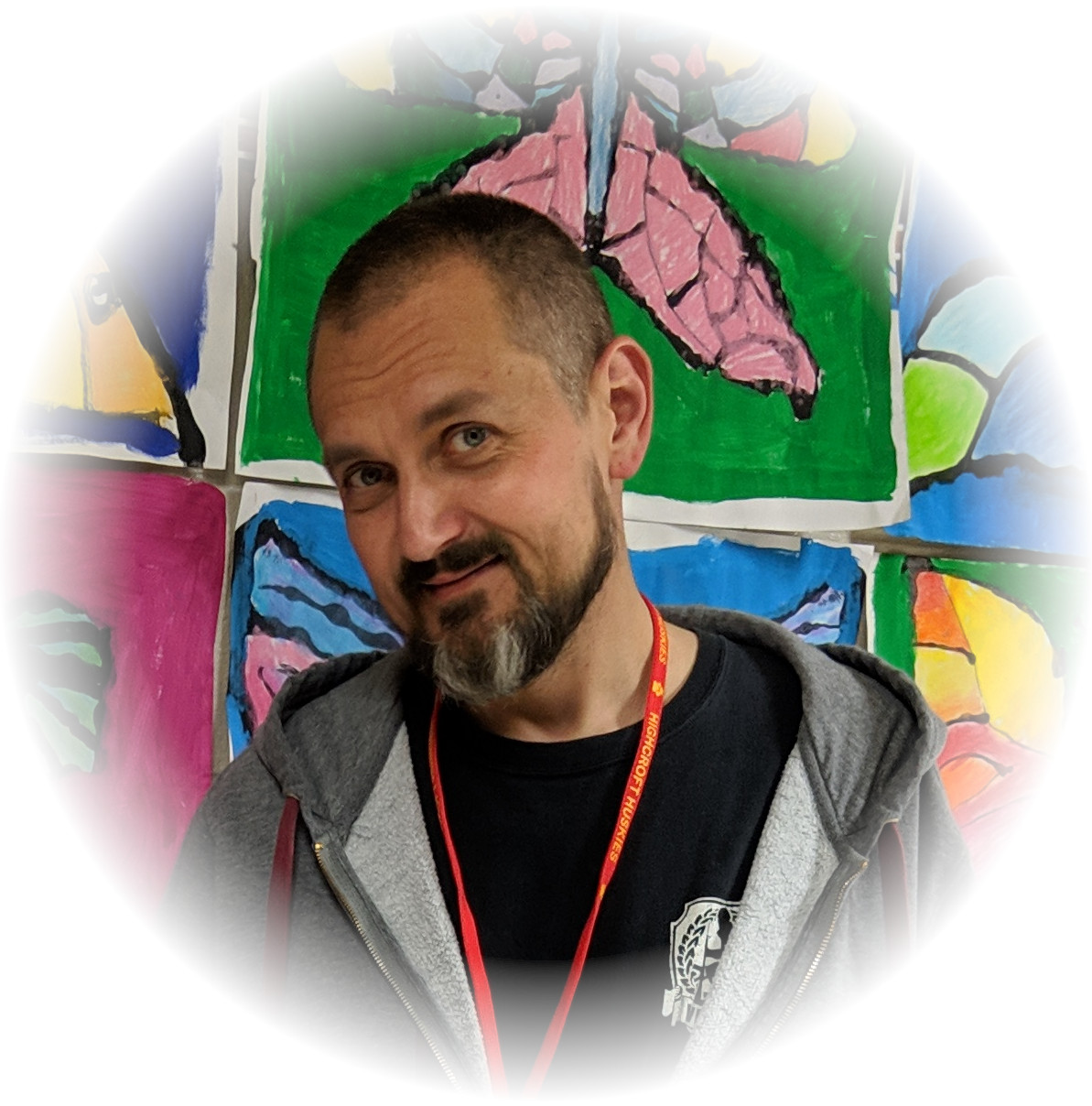
Two days in the slammer provide a good educational experience for me. Don’t worry! — False arrest by two cheap city cops on fabricated charges: all charges dropped and records expunged.
What I learned there is worth sharing.
The war rages in Ukraine. Meanwhile, in America we hold a vigil (wake) for Tania’s mother and my friend klemo (klemo’s war) at our always busy home.
Tania took her mother’s death hard. People come and go the whole day. And I am not sure how to process klemo yet.
I have had plenty of losses in my life, but this one was different somehow.
Spinning in my head were memories of young klemo sleeping on the chairs next to my Walter Reed hospital bed.
I was tired, sleep-deprived, and half-drunk. Then it got dark and quiet at our home.
A patriotic MAGA cop thought it a good idea to arrest yours truly on fabricated charges, so after everyone left, he knocked and was welcomed in by Tania. He spent time talking to my family. And I spoke with his partner in our garage about our many gun safes: one for hunting, one for combat, and one for demolition. Well-paid deputies operate here, many people I personally know — an underpaid city cop was out of his jurisdiction. Weapons he saw in my collection are far beyond what he can afford for work or passion. I spied a spark of envy, anger, despair, and maybe fear. Then we took a long ride … to the pen. No rights read, no explanation of charges, not even a proper introduction. On the way to the pen we talked about life, America, democracy, and wars.
Mike was his name. Small and of short stature like russians typically are — his heels had quite a lift on them, unclear if he was self-conscious about his short stature like Putin or needed it for comfort.
My hours-long ride to the pen that’s 15 minutes away was enlightening! Mike was well-informed about the influencers, and we talked about some of them for a while. He started with Jake Broe — YouTube — a legend on the Ukrainian scene: "do you support Jake?"
"I have supported his campaigns. He’s done a lot of good for people. And I respect him for it."
"So you believe everything he’s saying, about Trump, about the war?"
"I don’t believe anything I hear. Period. I operate on facts and rules of inference. Many things Jake says are justified. But he’s not politically neutral — his liberal convictions bleed through. 'Trump is a criminal enriching himself and his family,' which he tries to support with anecdotal evidence, are the kinds of statements I let slide by — Jake is not a judge. As far as the statements about the war in Ukraine, he’s often correct, but my sources are far more significant than his. I catch his confusion sometimes."
"So, do you follow Tucker Carlson? Are his sources better? I’d think they are."
This was an interesting moment, the only time the cop offered anything from himself. And oh boy, I could have a field day with this. But I am naturally a kind person. And at the time Tucker didn’t break with MAGA yet, so the admission meant little to me.
"Tucker developed a set of fallacies he uses for effect. His shows don’t deliver information, facts, or analysis. He delivers commentary, opinion, and narrative all in a very clear agenda-driven direction. Unlike Jake, he really is an 'influencer' working to sway a person to his side. And Jake is not very good at that."
This prompted a pause. I could tell the cop was "thinking on something." He slowed down his driving.
Towards the ride’s end, he asked, "Why do you hate russians so much?" And I replied "I don’t. I love all good people, including you. Many of my friends are russians. My son’s best friend is russian. Right now we mainly support the Freedom of Russia Legion in Ukraine because they were shortchanged too often in the past."
"Then why do you spend so much effort killing russians? I saw everything in your garage."
"When someone breaks into my home meaning harm to my family — I kill them."
He got visibly discomforted here. Pulled over. Started texting. I kept talking.
"I understand Ukrainians! These orcs aren’t russians like my friends I’d mentioned earlier — they’re katsap. Uninvited, they came bearing arms, killed, raped, tortured, and they’re still coming for more. Have you heard of Bucha massacre? Now myself, my children, and my grandchildren will kill katsap as long as we shall live. This will not be forgotten. This will not be forgiven. This will never stop. I will teach my children to teach their children to understand katsap nature. It is generational and it is now permanent."
"This is the only thing you need to understand about Ukraine." (What Does "War End" Mean? models exactly this.)
We didn’t talk after that. In the intake room where new heroes are turned over to the guards, I asked him: "Why did you bring me here?" He kept fidgeting with my handcuffs and the paperwork he fabricated — didn’t answer for a long time. And in the end, before leaving, he turned to me and said:
"People like you don’t belong in America!"
Meanwhile, the other cop had left my home, and my family figured out that I was not there. Surprised, Tania grabbed the kids, called our friends, and spent the night trying to collect me from the pen. Perhaps the grieving veterans were a bit too noisy. Or, as my friend Rahul suggests, "too scary." Perhaps supporting Ukraine is bad for America. Or perhaps being Ukrainian is bad in itself.
Definitely not the experience I had on my bucket list, but useful. The cop managed to get the "hold for 48 hours" in the paperwork, so Tania couldn’t collect me. She also didn’t understand or believe the charges brought against me, which didn’t help her case at the desk. I didn’t understand them either, although I’d learned what I was charged with only the next day. The cop wrote that "I beat my wife and horribly mutilated her face." The cops at the slammer may have had a bit of a cognitive dissonance having her stand there in front of them, hours after my arrest, with the kids in tow, asking for their husband and daddy. And it later took a while to dismiss the case because cops never showed up to court and never produced the police report the judge was asking for. And the police department was not helpful; expecting a lawsuit, they refused to talk to us and our lawyers.
Nevertheless, there I was. I met a lot of people I wouldn’t have otherwise. And I’d learned many things previously hidden from me by my middle-class shielded life. The first thing I did is sleep as much as I could. My busy life producing distributed systems, supporting Americans abroad, managing co-mentoring communities, helping a refugee community, and minding my growing family kept me perpetually sleep-deprived. I was always strictly short on time. And now I had nothing but time and no contact with the outside world. I know my family is fine, surrounded by good people; all the communities and families we’d helped are made up of many active and capable individuals regularly traveling through our home. I genuinely didn’t worry about them. And I didn’t worry about myself either: I knew I’d done nothing wrong, because I never do, and that people will start asking for me sooner or later. I had time! And it felt like an exceptional luxury. Something I needed badly. Something I didn’t expect to have.
Late the next day I was awakened to go talk to a judge on a filthy broken old-tv-looking device with a wired staticky analog phone handset. I was told the horrible things I’d done, and that came as a surprise. I wasn’t sure if I should be laughing or taking things seriously. And then the prosecutor jumped in and in a squiggly voice exclaimed that she would escalate to a felony because I had disfigured Tania for life, that she would never see straight again, and might lose an eye. See — with that squiggly and passionate paragraph, I knew this was pure garbage! "Not guilty," of course.
Next, the curiosity absolutely gets the best of me — the prison yard, common area, exercise area,
lots of folks dressed like me aimlessly moping around. This was Wake County's correctional facility. Maybe not the place
amateur smalltime criminals like myself are regularly brought to, but due to overflow in the system, new aspiring felons
are brought here. For a minute pride took me over
— I’m like the president! (my POTUS is a convicted felon.)
I’d seen this in movies. And I read a lot about this in books.
I don’t just adore technical manuals — I read a novel a weekend for decades now.
Solzhenitsyn — The Gulag Archipelago came to mind. But also US Army SERE — Survival memories. Man, some people get to live adventurous lives!
And I just write code, deliver goodies to needy families, towed howitzers to train stations, change diapers, and make bottles.
To personally and fully experience such a drastically different environment was a boon I could not resist!
And I felt unbelievably free! I was incarcerated, and I felt the kind of freedom I hadn’t experienced in a long time.
Within two hours I’d met and talked to about 80% of the prisoners in my block. Most were recidivists, meaning they’re comeback customers. Charges were various, but the largest group were violent offenders. I’d learned that the yard is divided into groups: whites sit with whites, blacks sit with blacks, and there are also "respect" subgroups sitting separately. I immediately decided to sit with the lowest-ranked black group — I am white. People stopped talking. I broke the ice asking if they play chess or checkers. An older gentleman — Derek, mid-fifties, in for a parole violation, played speed-chess openings cold and then stalled long on the middle game — took me up on the offer. Soon we were playing, talking, telling stories, and having a good time. Some people would come and go. But I noticed the omnipresent attention on me. And in a few hours I got to experience most of the groups in the yard, with the government-issue chessboard in tow.
The next day I decided to commit straight from the wakeup, through breakfast, all the meals, and activities. I had a following forming. I was telling people about Epictetus! Ancient philosophers of Stoic eras. Wisdoms of cultures long passed. There was a large group in the corner of the cell block around me. People were still bunched up in their self-designated groups, but we were together, talking, having a dialectic. I’d noticed that the TV went off in our corner. And a guard, and then another, quietly took the spots behind the columns. A conversation formed and took shape in an entirely unexpected direction for me.
First, the most vocal prisoners were black people. They wanted to figure out if Stoicism was a religion, like Christianity, and if the ancient philosophers were different from prophets like Jesus, Moses, or Mohamad. The guard quietly asked me to change the subject. But I didn’t have to. A fully tattooed white convict — Jake, skinny and long-faced, average voice, looked vo-tech-educated, maybe a welder — asked it directly:
"What makes these conduct rules always right? Is that part of human condition?"
For the next 20-30 minutes I was the one predominantly learning. Everything that followed was net-new to me: the rules in the hood, the laws of different gangs, the unwritten social contract of "the street," the code of behavior — "when is it okay to look and when it’s not" — why pippin' (ghetto-leg) was a cultural mistake. Within 40 minutes everyone was engaged, I started moderating slowly, and the guard asked if the group wanted to continue. The group did. And the guards promised to break it up if it "got out of hand."
The Lost Demographic
The next part of the conversation, after the guard’s interruption, turned straight to "the institution." Now mainly the older people were holding the dialectic. We were getting past curfew, but the guards let it continue. By now the entire cellblock was arranged in concentric circles. A couple of older black female guards were taking an active part in the conversation. It started with people recollecting how they became recidivists. Slowly and carefully, they introspected. The guards had relatives in the system too. I stepped back, making myself transparent, letting people engage freely. And the conversation kept revisiting the question of knowing good and bad decisions. Sometimes the guards would toss in opinions — "just be good and you’ll be okay" — and the older, wiser prisoners would steer past them. In the entire group I was the least knowledgeable.
On their own, the group moved into solution-discovery. Themes of "society separates us out" resurfaced here and there, but the clear intuitive direction was "how we fit into society productively." It’s been too long for me to recollect the exact nature of the conversation. I can tell you employment ideas were well shared, but the education ideas were not. I could see that we’d hit "lights-out" soon enough, so I asked the final question.
"If you could take FREE practical classes on how to do better in life, none of that college crap, just the real deal, applicable to your life today — would you? Please raise your hand." At the time I didn’t know that raising hands is not something prisoners do. But people reservedly raised their hands, clearly demonstrating they meant to. I remember being surprised to see hands go up in the outer concentric circles because by then we were speaking softly, and I wasn’t sure people in the back could hear. And the last part of the discussion was about how to make this happen. The hard part: how do you feed yourself while you take the time for free education? And our night ended there.
Who Belongs in America?
I didn’t get to continue that conversation. Tania tried to post my bail, but the cop’s domestic-violence framing made her — the alleged victim — ineligible. She handed the money to our friend Greg, and Greg bailed me out. I left my peculiar and new-to-me demographic behind, my pockets full of small white scraps of paper — phone numbers people had written down and slipped to me as they passed. And I walked away with two distinct understandings I didn’t have before.
-
We are an institutionalized nation.
-
We are a hopelessly divided nation.
That entire prison yard means only one thing: "You do NOT belong in MY America!"
In the cop’s mind, when he was taking me to the pen with his fumbled paperwork, he was really taking me out of his America, at least temporarily, and the only way he knew how.
The bedrock of this is entitlement. "I am a Christian white American male born in America, so I belong better." It is the exact same type of entitlement a drunk russian vatnik feels sitting in his outhouse in muscovy suburbs — threatened by a brighter, better educated foreigner capable of building a modern running-water toilet for themselves. (Roosevelt and Stalin Feeding Chickens explains this dynamic exactly.)

Leave a comment