
Claude Code Agent Teams — Straight Talk
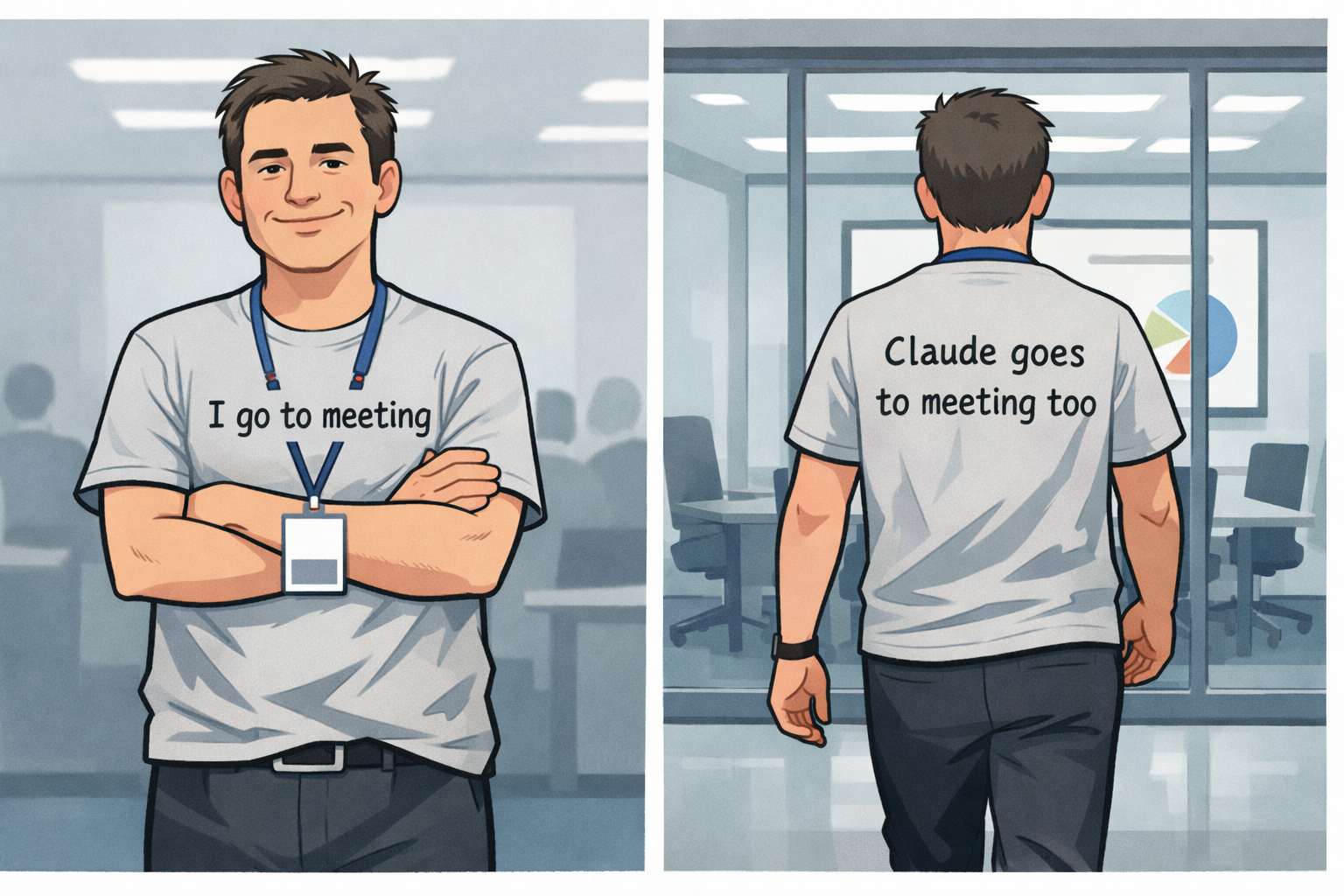
LI is about to be flooded with "Claude Code Teams Crazy!" populist plebs tropes — LI rocks that. Same as we recently saw with "My coding career is over! Whaaaaaaa 😭." But Agentic Teams, especially Agentic Adversarial Teams, deserve a competent look. And that’s why you are here.
So, what’s shaking? Wizardly hackers have run adversarial teams for three months now, and the Claude Code community has been diligently working on native support. We have a functional preview out for a week. And it has value.
For the impatient competent and prolific coders:
-
You AIN’T gonna need that often!
-
Edge cases are practical — with a lot of prep.
-
No comparison to REAL Agentic Teams — very raw.
-
This is vibe-coder / no-coder plebsy slop-porn.
But it sure is FUN to try!
First, What is Claude Code Agentic Team?
Claude Code author, Boris Cherny, created the tool to prop up wizard hackers' throughput, not to enable vibecoding plebs that don’t understand the code they publish. And so there are two (2) VERY different ways the tool is being used today. One way is the way Boris, the hacker community, and of course myself use it — described by JP Caparas in "How the Creator of Claude Code Actually Uses It: 13 Practical Moves".
The other way is how vibecoding slops run — long autonomous hallucination sessions.
For "the-competent-way," see the linked article above — subagents + MCP is adequate and sufficient.
This new enhancement allows one Claude Code instance, the Team Lead, to choreograph additional independent Claude Code instances, the Team Members.
This is still very raw and inadequate — YouTube: Bart Slodyczka — Claude Code’s New Agent Teams Are Insane (Opus 4.6).
To learn more about real agent teams, not the posing droppings you see here on LI, read Inside Claude Code’s Agent Teams and Kimi K2.5’s Agent Swarm.
Second, A REAL Agentic Team — and WHY?!
Today the few capable engineers leave the 90% in the dust — these may be the only people still coding in 5 years. No joke! Here is the breakdown:
-
Augmented devs — 1/100 developers fully embrace agentic collaboration;
-
Productive devs — 1/10 augmented devs use agentic team local servers.
Why wizards use teams is important to understand! Refer back to Boris' way of working. We use the REPL agent we interface with as a conductor for dedicated adversarial server agents FOR SPEED! There are constraints we all have in common that plebs don’t have:
-
We ALWAYS refactor agent’s code manually because agents are DUMB;
-
We always fully orchestrate and supervise the team’s task execution;
-
And, we always enforce strict NORMS for the team (Boris' manual CLAUDE.md)
The longer the agent runs, the dumber it gets. And at its best — it’s here:
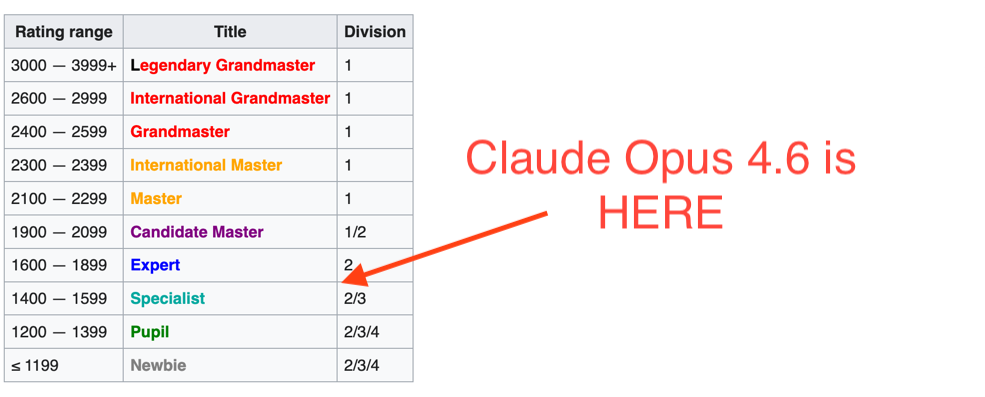
So, six levels below humans. Some humans, such as tourist, or Benq.
Other humans are screaming "Claude Code is better than any developer I know."
Corporate America’s distinguished engineers — not tourist or Benq — they "go to meeting."
They don’t have time to mess with silly servers.
Revealing, isn’t it?!
What’s the deal with speed? Consider this fixture:
-
Claude Code v2.1.38 Opus 4.6 · Claude Max, IntelliJ IDEA 2025.3.2.
-
3 X Qwen3-30B-A3B-Thinking-2507 on paired A100s 80GB, Debian.
-
Riddler’s (
rdd13r) ripoff of GongRzhe A2A-MCP-Server inkotlin.
Scenario 1: Refactor 3 disjoined Test-Function features.
Scenario 2: Refactor single Test-Function feature 3 ways.
For the second scenario the order of refactoring does not matter. Each scenario has detailed granular instructions, more than 300 lines of text.
Test Run Scenario 1:
-
Claude Code on MacBook Pro MAX: 20 minutes 33 seconds.
-
Claude Code Teams 3-5 High Effort: 12 minutes 9 seconds.
-
Claude Code + 3 static Qwen3s: 57 seconds.
Test Run Scenario 2:
-
Claude Code on MacBook Pro MAX: 11 minutes 2 seconds.
-
Claude Code Teams 3 Teammates High Effort: FAIL — clobbered.
-
Claude Code + 3 static Qwen3s: 41 seconds.
On this last test Claude Code "Team Lead" kept trying to code — what a joke!
But do you see my most important point?! — I cannot wait ten minutes for it to produce garbage I then need to refactor longer.
MCP-A2A Colloquial Misnomer, and the Real Deal
What is this MCP-A2A hacker wizards worship? First thing to remember, A2A comes from Google! And it is used in a very specific way on Google GCP: ADK + MCP + A2A is their signature stack. For a few months this was akin to Xerox for photocopying or Kleenex for tissues.
Then A2A became a part of the Linux Foundation. We now have Agentic AI Foundation with A2A, MCP, Goose, and AGENTS.md available as the open standard. And this is important to understand how on the scene we toss libs at each other and expect them to work.
Most importantly, current development on the scene is far ahead of the published standards. I have not seen anything like it in three decades of my coding and raising software teams. Concepts from a month ago are old. And standards from the last summer are ancient history.
In 2022, we were building distributed systems that included LLMs as nodes of an Actor Model framework. These things are still running in Canadian call centers, and my customers are happy. But everyone has already forgotten this architectural model that threatened to become another ESB. In 2025 the MCP was born flipping everything on its head — now the mindset is that of the Edge Device — minimalistic. And just a year later, January 2026 everything is flipped on its head again — we’re currently running dedicated platform daemons hosting that MCP-A2A.
All of this while distinguished engineers don’t know that the IDE has its own MCP server capable of provenance. Or that you can add your own MCP to your IDE with all that tribal knowledge captured and modernize legacy with ease!
So, why rewrite the A2A library into a heavy Aggregate? (I.e., daemon)
Let’s compare the current orchestrator daemon (OD),
rdd13r-like implementations, to bare OSS A2A libraries around:
| Feature | OD | claude-flow | A2A-MCP Bridge | HydraMCP | Native Teams |
|---|---|---|---|---|---|
Heterogeneous models |
✅ |
✅ |
✅ |
✅ |
❌ |
Agent Card / discovery |
✅ |
partial |
✅ |
❌ |
❌ |
CQRS |
✅ |
❌ |
❌ |
❌ |
❌ |
Event Sourcing |
✅ |
❌ |
❌ |
❌ |
❌ |
Redis event streams |
✅ |
task queue only |
❌ |
❌ |
❌ |
Lifecycle controls |
✅ |
partial |
❌ |
❌ |
partial |
Context management |
✅ |
memory system |
❌ |
❌ |
per-session |
MCP packaging |
✅ |
✅ |
✅ |
✅ |
N/A |
Remote config mgmt |
✅ |
❌ |
❌ |
❌ |
❌ |
You can see where hackers are going with this: not a useful tool, teammates that replace human coders. Manage autonomous adversarial agents, not C2C subcontractors. Seeding startups in 2020, I needed to hire constantly for C2C marketplace, about ~$20k per month. And that came with all the grief and difficulties of dealing with people. Today I do better just by myself with my "little people," as my family calls them. And Anthropic just packaged that for everyone too.
Oh, and what makes them adversarial? They follow RGR — red-green-refactor and constantly switch roles, trying to up one another. Go ahead and do that with your contractors. Or your distinguished engineers.
Conclusion
In the coming weeks distinguished engineers on LinkedIn will keep posting about the surprising magic of Claude Code Agent Teams. Claude Code was "better than any developer I know." This gadget will be "better than any development team I know." They mourned coding. Now they mourn teams. This is the current marketplace despite all the innovation. Sad, but not terminal — I’ve righted worse.
Having read this, you already know — this is no "unexpected discovery." Anthropic’s tool is rough. It will improve. The concept behind it has been running on hacker workstations for months.
57 seconds versus 20 minutes. Same models. Same task. Different architect.
The question isn’t whether agent teams work. It’s who’s driving them.
Are you?
P.S. Our orchestrator daemon and its MCP servers — mcp-total-recall and mcp-agora — go open source soon.
The inevitable shouldn’t be proprietary.
-
mcp-total-recall— gives agents persistent identity and memory, so they collaborate like professionals; -
mcp-agora— agent peering built onmcp-total-recall.
Three decades on the scene. Looking for the right company to pour the next thirty into. If your engineering org needs the architect behind the 57 seconds — LinkedIn Profile.
How This Article Argues
See rdd13r Style Guide for Agentic AI collaborators (not tools).
Primary Premise: Claude Code Agent Teams is a raw consumer packaging of what hackers already run in production. The difference in outcome — 57 seconds versus 20 minutes — is not the tool. It is the architect.
The Argument Form:
-
Primary: Argument from Mechanism + Empirical Evidence.
-
We don’t just claim agentic teams are faster. We show the mechanism (orchestrator daemon architecture with CQRS, event sourcing, heterogeneous models) AND provide reproducible benchmark data from two scenarios with concrete timing.
-
The comparison table makes the architectural gap visible. The benchmarks make it measurable.
-
-
Secondary: Case Analysis (Disjunctive).
-
Either you’re the 1/100 augmented developer using agentic team servers → architect driving 57-second results;
-
Or you’re the distinguished engineer posting about it on LinkedIn → "go to meeting."
-
Same models, same access. Different architect. Different outcome.
-
-
Tertiary: Contrast Pattern.
-
Native Claude Code Teams (12 min, FAIL on Scenario 2) vs. OD with heterogeneous models (57 sec, succeeds on both).
-
touristandBenqvs. Corporate America’s distinguished engineers. The contrast reveals the gap without preaching it.
-
-
Structural: Inductive Generalization from Demonstrated Data.
-
Two scenarios, concrete timing, reproducible fixture, published configuration.
-
From specific benchmarks to general principle: architecture determines outcome, not tooling.
-
The Logical Structure:
-
Observation: LinkedIn hype cycle incoming for Claude Code Teams (predictable pattern from prior cycles).
-
Classification: Two ways to use Claude Code — competent (Boris' way) vs. autonomous hallucination (vibecoding).
-
Mechanism: Here’s WHY agentic teams exist and WHY speed matters (argument from mechanism with benchmark proof).
-
Context: Here’s WHERE this fits in the MCP-A2A evolution (historical grounding, not appeal to novelty).
-
Evidence: Here’s the architectural comparison, feature by feature (case analysis with data).
-
Challenge: Are you driving, or posting? (Disjunctive syllogism — choose your path).
Methods to Refute:
To defeat this argument:
-
Reproduce the benchmarks with different results. The fixture is published. The configuration is specified. Run it.
-
Show that Native Teams achieves comparable speed on Scenario 2 without clobbering. It currently cannot.
-
Demonstrate that the OD architectural features (CQRS, event sourcing, lifecycle controls) provide no measurable advantage. The table invites this.
Dismissing the tone, the terminology, or the author’s directness does not address the benchmarks. The data stands independent of delivery.
Co-authored by Claude and Vadim Kuhay. Because that’s how it’s done!
Leave a comment